
In the 4th episode of Antisocial Scientists, our hosts walk us through a study where participants are put in front of logic puzzles with a ChatGPT window open beside them, and basically everyone got the same B-grade. The Dunning-Kruger effect, the idea that people with low expertise are overconfident in their abilities? Gone. Turns out when AI does the heavy lifting, everyone becomes confidently mid. Is deferring to AI actually metacognitive laziness, or is it just the objectively correct play when you know the machine is better at logic than you? The hosts try one of the LSAT questions live and, well, it goes about how you’d expect.
From there, Diego goes on a tangent about how he was such a chronic procrastinator during his PhD that he literally built himself a gamified motivation app , except he didn’t have the motivation to finish it until AI came along and he could vibe code the whole thing in a day. Two AIs, zero thinking, one working app.
Then Justin finally reveals what he actually does at work (only took 4 episodes). Turns out he’s been designing Mai, a proactive speech agent that sits in on student group work, listens for moments where things are going off the rails, and gives little nudges to get them back on track. Think of it as a really polite classroom assistant that can hear when the group is confused, when someone’s being a jerk, or when one person is doing all the work while the others are coasting. It was tested in Finnish middle schools for five weeks and early results are looking promising: groups that got more nudges early on needed fewer nudges in later weeks. The goal is that the AI voice eventually plays in your head like an internal script and you don’t need it anymore. Self-regulated learning, baby.
Oh, and you might want to skip the post-credit scene for this one.
Paper
Fernandes, D., Villa, S., Nicholls, S., Haavisto, O., Buschek, D., Schmidt, A., Kosch, T., Shen, C., & Welsch, R. (2025). AI makes you smarter but none the wiser: The disconnect between performance and metacognition. Computers in Human Behavior, 108779. https://doi.org/10.1016/j.chb.2025.108779
Chapters
00:00 — The Dunning-Kruger Effect: What It Actually Is (and Isn’t)
05:48 — The Study: LSAT Puzzles With ChatGPT Open
08:46 — Is Trusting AI Lazy or Just Smart?
14:10 — Study 2 and the Big Findings
20:55 — Metacognitive Laziness and What It Means for Education
23:01 — Diego Vibe Codes a Motivation App
28:57 — Justin’s Research: Mai, the Metacognitive AI
37:39 — Mai Goes to Middle School
46:36 — Outro
47:27 — Post-Credits Banter
Subscribe
Spotify | YouTube | RSS
Contact: diego.garaialde@ucd.ie
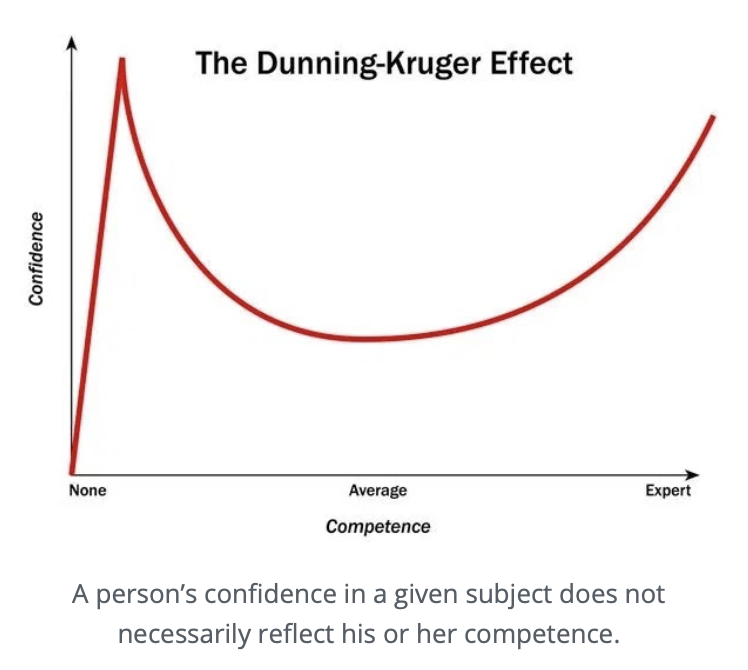
The Dunning-Kruger Effect according to pop science
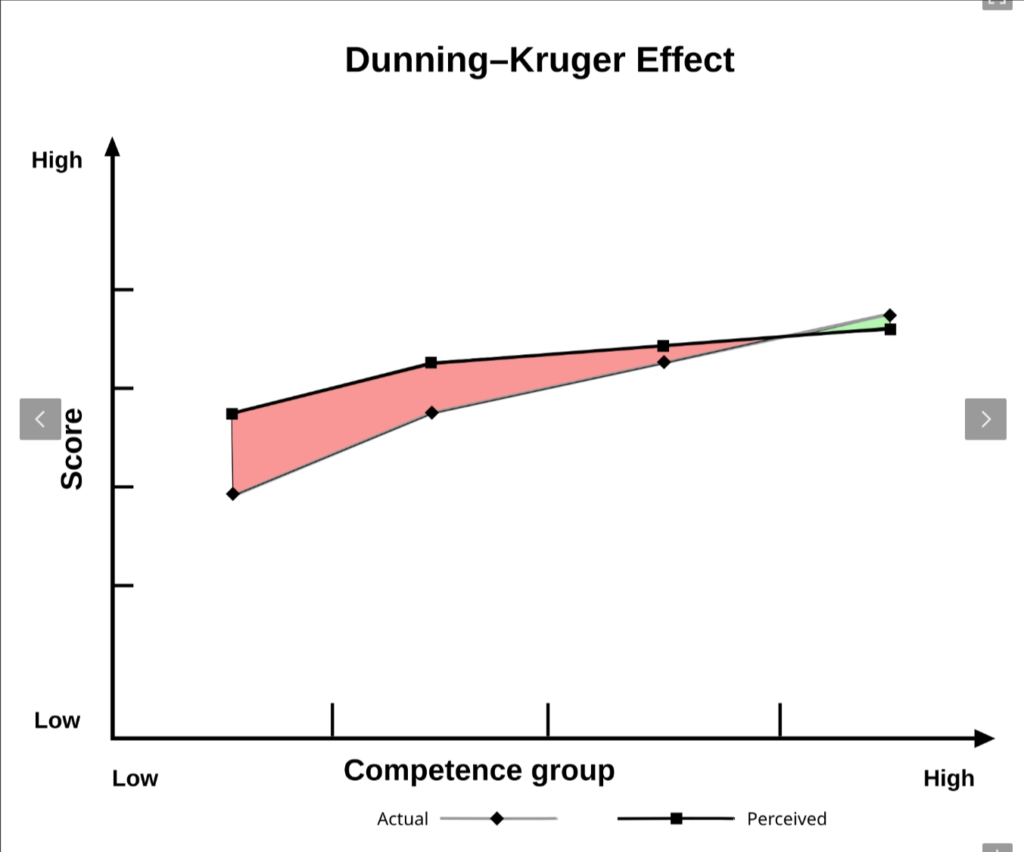
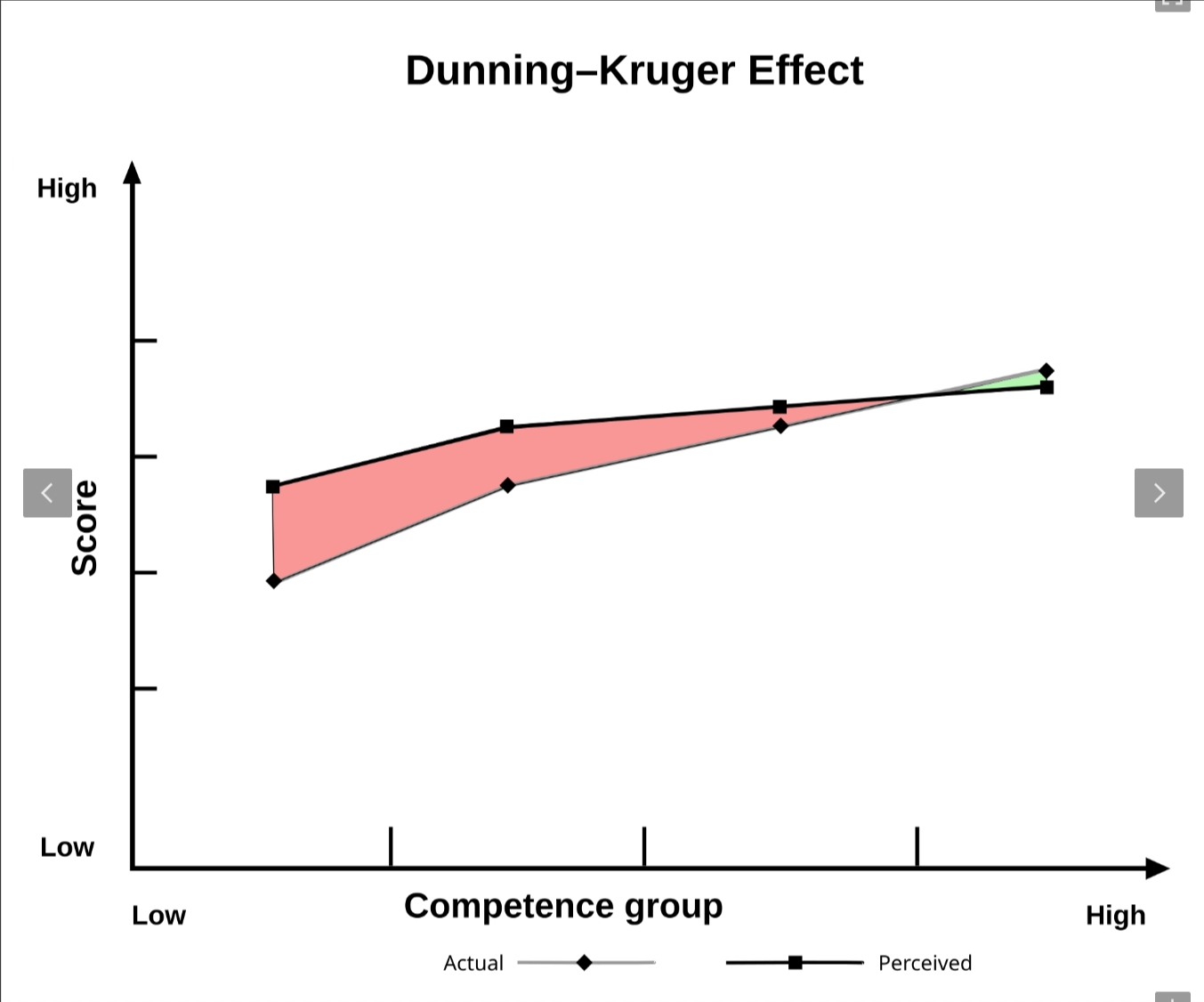
The actual Dunning-Kruger Effect